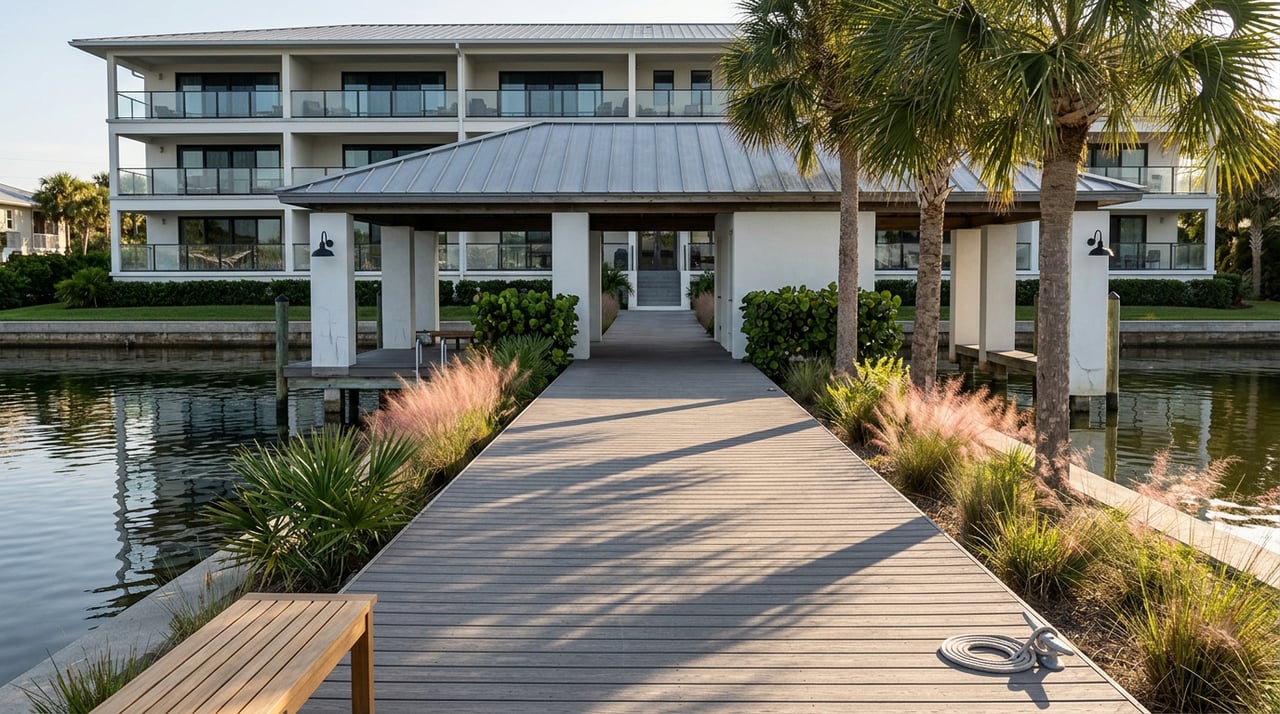
Two condos list within a week of each other, both around $425,000, both two bedrooms, both a short walk from sand. One sits inside the Pier Park footprint on the west end. The other sits on Thomas Drive, across from the Grand Lagoon on the east end. A buyer comparing them on price per square foot alone will treat them as interchangeable. They are not, and the reason has almost nothing to do with the beach.
Panama City Beach's citywide numbers flatten this distinction. The median sale price for all home types across the city was $383,770 for the three months ending May 2026, down 4.1% from the same period the year before, with homes taking roughly 106 days to sell on average even as the number of sales climbed year over year. That single figure is useful as a temperature check. It tells you nothing about why a Thomas Drive condo and a Pier Park condo at the same price point can behave like two different asset classes once you own them.
Two Corridors, Same City
Pier Park anchors the west end. It is Panama City Beach's commercial center: shopping, dining, a movie theater, and the Russell-Fields City Pier stretching 1,500 feet into the Gulf. Buildings like Calypso Towers sit close enough to walk to all of it, which is exactly why the building draws steady renter demand. Tidewater Beach Resort, a larger beachfront complex on the west side, leans into a full resort setup with multiple pools and dining on site. Sterling Breeze and Aqua sit in the same west-central corridor, with Aqua carrying a more upscale finish for buyers who want beachfront without leaving Panama City Beach for a 30A price tag. The west end is built to serve a visitor.
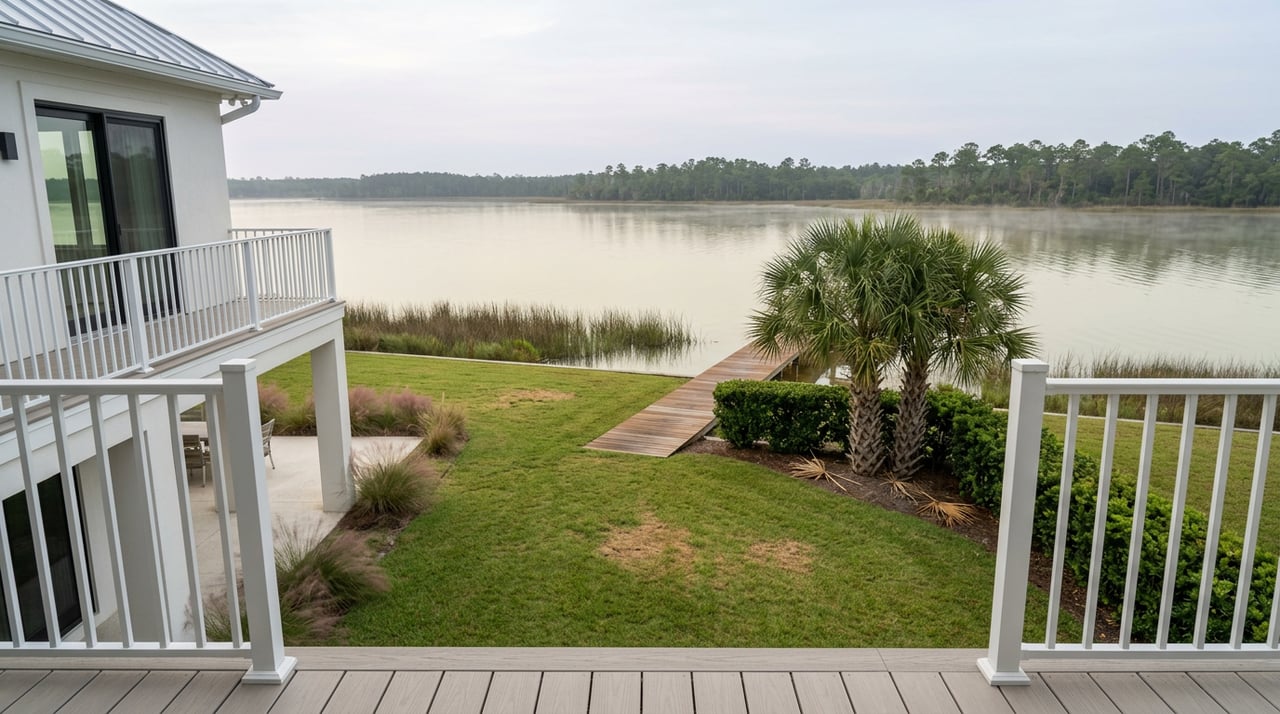
Thomas Drive defines the east end, running from the Front Beach Road intersection down to the peninsula's southern tip. This stretch is wedged between the Gulf of Mexico and the Grand Lagoon, which is the geographic fact that shapes everything else about it. Buildings here, Sugar Beach Condominiums, Dunes of Panama, Summerhouse, Treasure Island Resort, Seychelles Beach Resort, Regency Towers, Watercrest, Gulf Crest, Pelican Walk, Commodore, Moonspinner, and Mariner East among them, sit closer to boat slips, marinas, and St. Andrews State Park than to a shopping mall. The east end is built to serve someone who lives there, at least part of the year.
What the Listings Actually Show
The two corridors don't just feel different. The numbers on active listings back it up, even accounting for the fact that these are separate data pulls covering slightly different property mixes.
| West End / Pier Park corridor | Thomas Drive / East End corridor | |
|---|---|---|
| Typical price range | Broad West End condo median list price of $319,950 as of July 14, 2026; homes in the immediate Pier Park footprint running $400,000 to $500,000 as of early 2026 | Median sale prices of $390,000 to $450,000 as of early 2026, with Gulf-front or lagoon-front properties carrying private docks listing from $600,000 to over $1,000,000 |
| Average days on market | 130 days for West End condos as of July 14, 2026 | 133 to 149 days as of early 2026 |
| Average price per square foot | $408.87 for West End condos as of July 14, 2026 | $420.90 at Summerhouse, one of the corridor's larger buildings, as of July 8, 2026 |
| Defining draw | Walkable retail and dining gravity around Pier Park | Dual Gulf and Grand Lagoon water access, with boat slips as a real price driver |
Days on market land in a similar range on both ends, and per-square-foot pricing is close enough that a spreadsheet would call this a wash. That's the trap. The number that actually separates these two corridors doesn't show up in a listing at all.
The Line a Median Price Can't Draw
Naval Support Activity Panama City sits directly on Thomas Drive. For many residents who work there, the commute runs zero to two miles. That single fact does more to explain East End pricing resilience than any amenity comparison.
Pier Park's west end runs on a single engine: tourism. Its rental income, its retail traffic, its restaurant reservations, all of it tracks the same seasonal curve. When that curve dips, everything tied to it dips together. Thomas Drive runs on two engines. It still captures vacation rental demand, but it also sits inside a corridor with a baseline of year-round residents whose housing need has nothing to do with spring break or Fourth of July weekend. A property manager's occupancy and a landlord's occupancy are different questions, and the east end is one of the few stretches of this beach where both audiences are shopping the same buildings.
A vacation-driven corridor and a corridor with an installation-anchored resident base will show you the same square footage price. They will not show you the same floor under that price when tourism softens.
This is not a claim that Thomas Drive is the better buy. Pier Park's walkability is a real, durable advantage for a lifestyle buyer or an investor chasing peak-season nightly rates. It is a claim that the two corridors are pricing in different kinds of demand, and a buyer who only compares dollars per square foot is missing the variable that actually explains why one corridor might hold occupancy better in October than the other.
The Zoning Question That Surfaces After You're Under Contract
Panama City Beach's Ordinance 1632 governs short-term rental registration and inspection citywide, requiring a valid Vacation Rental Certificate for any stay under 30 days and setting an occupancy limit of one person per 150 square feet of habitable space, with balconies, porches, patios, and garages excluded from that calculation. That ordinance applies the same way on both ends of town. The city's short-term rental page also flags something buyers skip past: the ordinance only applies inside city limits, and Bay County enforces a separate rule for unincorporated parcels.
Zoning eligibility is the piece that actually differs by location and by building, and it's worth confirming before you write an offer rather than after:
- Confirm the parcel's zoning designation. According to Vacation Rental License, single-family R-1 zoning is typically restricted and often does not allow it at all.
- Check whether the property sits inside Panama City Beach city limits or unincorporated Bay County, since the two jurisdictions run separate registration systems.
- Pull the condo association's governing documents.
- Confirm the unit's habitable square footage against the ordinance's occupancy formula before you model rental income, since garages, porches, and balconies don't count toward the number that sets your legal guest limit.
None of this is dramatic until it's discovered late.
Two Different Rental Calendars
The seasonal curve looks similar on paper across Panama City Beach: a well-managed unit averages roughly 58% to 62% occupancy annually, with March through August running hot at 80% to 90% occupancy and December through February settling into a slower, monthly-renter Snowbird pattern. September through November is the shoulder season, and this is where the two corridors start to diverge in practice. Pier Park's shoulder season leans on whatever event traffic passes through, including the Thunder Beach Motorcycle Rally and the region's fall seafood festivals. Thomas Drive picks up the same event traffic but adds a second layer underneath it, the steady trickle of NSA-connected renters, extended-stay guests, and boaters using the Grand Lagoon marinas outside of peak tourist weeks. That second layer is thinner than the summer surge, but it's there in a way the west end doesn't have.
Matching the Corridor to the Plan
A buyer chasing peak-week nightly rates and walkability should look hard at the Pier Park corridor. Nothing on Thomas Drive replicates that walk-out-the-door access to Calypso Towers-style retail density.
A buyer who wants a property that can absorb a slower month without the rental math collapsing, or who values boat access and quieter streets alongside the beach, has real reasons to look east. St. Andrews State Park, covering 1,200 acres at the peninsula's southern tip, adds hiking trails, protected jetties, and a launch point for boat trips to Shell Island, features that draw a different kind of long-stay guest than a Pier Park storefront ever will.
Neither corridor is the objectively better buy. They are pricing two different kinds of demand at similar dollar figures, and the buyer who understands which demand engine they're actually purchasing into is the one who won't be surprised by an October occupancy report.
A Few Common Questions
Does Ordinance 1632 apply the same way on both ends of Panama City Beach? Yes, as long as the property sits within city limits. The registration, inspection, and occupancy rules run citywide. What differs by parcel is the underlying zoning designation that determines whether short-term rental use is even permitted there in the first place.
Is Thomas Drive a better rental investment than Pier Park? Better depends on your goal. Pier Park's walkability supports strong peak-season nightly rates. Thomas Drive's dual water access and proximity to Naval Support Activity Panama City give it a demand base that isn't purely tourism-dependent, which can matter more in the shoulder season than at the summer peak.
Do I need to check anything beyond the city's short-term rental ordinance before buying for STR income? Yes. Confirm the parcel's zoning designation, verify whether it falls inside city limits or unincorporated Bay County, and review the condo association's governing documents
If you're weighing a west-end condo against an east-end waterfront property, or trying to figure out which corridor actually fits the plan you have for the property, Bode at the Beach can walk the numbers with you building by building. Start Your Beach Search today.
This article is general information, not legal, tax or financial advice. Consult a qualified professional about your situation.