Trying to compare HOA dues and condo fees on 30A East and not sure what they actually cover? You are not alone. Inlet Beach communities can look similar from the outside, yet their budgets, insurance, and reserves work very differently. In this guide, you will learn the core differences, what fees typically include in Inlet Beach, how they affect your monthly cash flow and lending, and how to spot red flags before you buy. Let’s dive in.
HOA vs. condo fees in Florida
Condominium associations are common for multi-unit buildings. You own your unit and share ownership of common elements. Monthly assessments fund common-area maintenance, master insurance, reserves, and services.
Homeowners associations apply to townhome and single-family developments. You own the lot and the improvements. The HOA maintains common areas and, depending on the declaration, may also handle some exterior maintenance. Monthly dues fund those items and reserves.
Florida treats these associations under different statutes. Condos operate under Chapter 718, while HOAs operate under Chapter 720 of the Florida Statutes. The rules define disclosures, budgets, reserves, meetings, voting, assessment procedures, and enforcement. The Florida Division of Condominiums, Timeshares and Mobile Homes also oversees certain condo procedures and provides consumer guidance.
What fees cover on 30A East
In Inlet Beach, fee line items depend on location, age, amenity level, exposure to wind and flood, and whether the building has elevators or high-end amenities. Here is what you will commonly see.
Building and common-area maintenance
- Roofs, exterior paint, siding, balconies, stairwells, hallways, and elevators
- Parking lots, driveways, common plumbing and electrical systems
- Coastal items such as dune protection, boardwalks and walkovers, beach access stairs, and erosion mitigation
Utilities and services
- Common-area electric and lighting, water and sewer for common spaces
- Trash and recycling for common areas or units, depending on the community
- Pest control for common areas
Amenities and operations
- Pools, spas, fitness rooms, gates and security, and landscaping
- On-site management or concierge, on-site maintenance staff
Insurance
- Condominiums typically carry a master policy that covers common elements and the building envelope. Owners insure interior contents and finishes per the condo documents.
- In HOAs and townhomes, insurance varies by the declaration. Some cover building exteriors and roofs, while others only cover shared common areas. You must confirm who insures the roof and walls.
Administrative and legal
- Management fees, accounting, legal, tax prep, required filings, and board expenses
Reserves and capital replacement
- Scheduled funding for predictable big-ticket items such as roofs, repainting, elevator replacement, and HVAC
Rental-related items and common services
- If the association runs a rental program, there may be related fees or processes
- Parking permits or separate amenity usage fees may apply
Debt service on association borrowing
- If the association borrowed for a major project, dues can include loan payments
Inlet Beach examples to set expectations
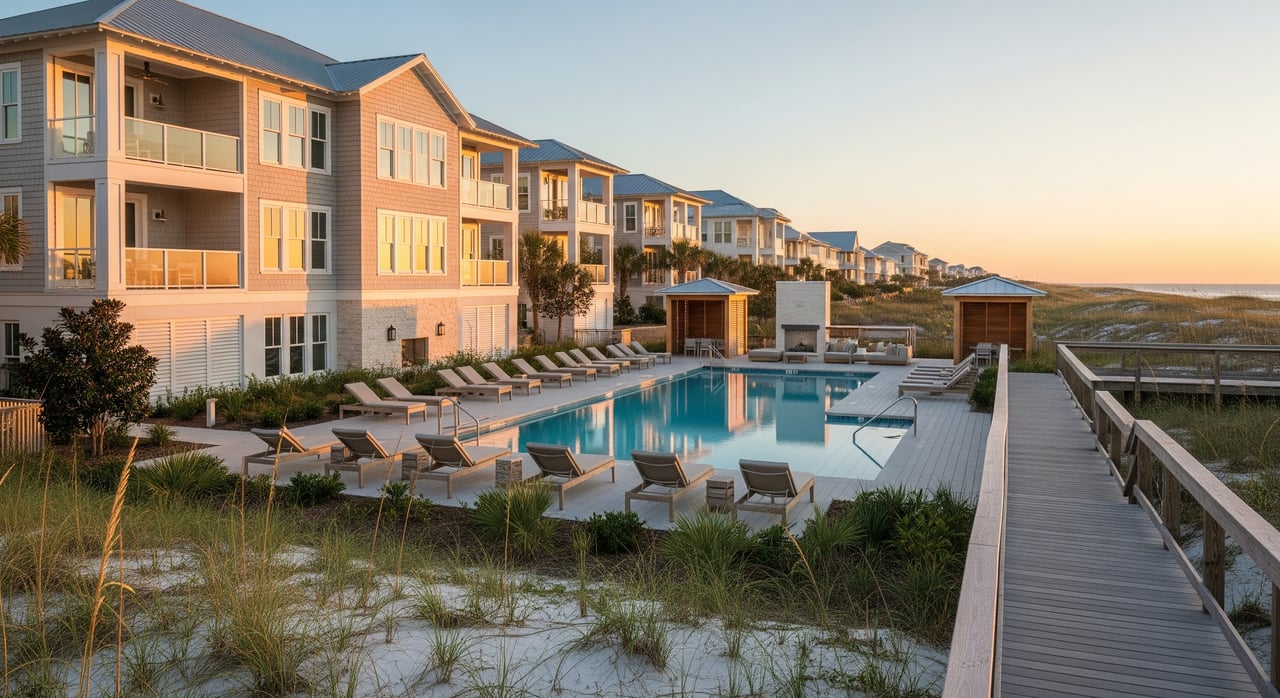
- Gulf-front mid-rise condo: Higher fees driven by master insurance, elevator contracts, multiple pools, dune walkovers, frequent exterior painting, and corrosion control.
- Low-rise walk-up: Lower operating costs without elevators, but still shares dune access and building envelope maintenance.
- Townhome HOA: If exteriors and roofs are included, dues trend higher. A covenant-only HOA that handles landscaping and common areas will have lower dues, but owners carry more individual maintenance and insurance.
How fees affect your monthly budget
Treat monthly dues as part of your core housing cost. Build a full picture before you write an offer.
- Mortgage principal and interest
- Property taxes in Walton County
- Homeowners insurance for your unit interior and liability
- Flood insurance if required by your lender or flood zone
- HOA or condo assessments
- Utilities not covered by the association, such as electric, water, gas, and internet
- Your own reserve for interior upkeep and an emergency fund for special assessments
Special assessments can occur for major repairs or underfunded capital projects. A practical guideline is to keep an emergency reserve equal to 3 to 6 months of HOA or condo dues.
Lending and project eligibility
Lenders include HOA or condo fees in your debt-to-income ratio. Higher dues can change how much you qualify for.
Condominium loans may require project approval under FHA, VA, or conventional programs such as Fannie Mae and Freddie Mac. Lenders look at reserve funding, owner-occupancy ratios, litigation, and delinquency rates. If a condo project does not meet program rules, your financing options may narrow or require a larger down payment.
Reserve strength matters. A thin reserve or a pattern of frequent special assessments can limit financing. High owner delinquency on dues is another red flag for lenders. Coastal insurance exposures also play a role. Large wind deductibles on the master policy or inadequate limits can increase owner risk of assessments after a storm.
Due diligence checklist for Inlet Beach buyers
Request these documents early so you can make a confident decision.
- Current-year budget and actuals with prior 2 to 3 years for comparison
- Most recent reserve study or reserve schedule
- Financial statements and balance sheet, including reserve account balance
- Delinquency report showing percent of owners over 60 or 90 days late
- Board meeting minutes for the last 12 to 24 months
- Insurance certificate, master policy declarations, and deductible amounts
- Rules, bylaws, declaration or CC&Rs, and any short-term rental policies
- Any pending litigation and legal opinions
- History of special assessments and repayment terms
- Management contract if professionally managed
Red flags to watch
- Very low reserves relative to documented capital needs or no reserve study
- Repeated or recent special assessments without a clear long-term plan
- High or rising delinquency on dues
- Pending major litigation
- Association borrowing without a transparent repayment plan
- Master insurance with very high wind or hurricane deductibles
- Restrictive rental policies or a very high share of short-term rentals that could affect financing or insurance
Local coastal factors on 30A East
Coastal exposure drives costs. Beachfront or near-beach buildings face more corrosion, frequent exterior painting, and wind and flood risk. That means higher insurance premiums and a greater chance of big capital projects.
Flood insurance is common and may be required for financed purchases in certain FEMA zones. Seawalls, dune stabilization, and beach renourishment can trigger special assessments or association borrowing in beachfront communities.
The short-term rental market influences policies and budgets. Some associations permit rentals and may collect additional fees. Others restrict rentals. A high investor mix can impact lender eligibility for certain loan programs.
Real-life ownership scenarios
Scenario A: Gulf-front 2-bed condo in a mid-rise
- Ongoing costs: master insurance, elevator contracts, two pools, dune walkover, on-site manager, frequent exterior paint and corrosion control.
- Risks: roof or balcony repairs may require a special assessment if reserves are thin. Hurricane claims can trigger large deductibles that roll down to owners.
- Due diligence: confirm reserves for roof, balcony, and elevator. Review recent structural inspections and any coastal management projects.
Scenario B: Near-beach townhome in an HOA
- Ongoing costs: moderate dues if exteriors and roofs are covered, plus landscaping and limited amenities.
- Risks: community-wide drainage or infrastructure projects can lead to special assessments. If roof reserves are not adequately funded, expect periodic assessment cycles.
- Due diligence: verify whether the HOA insures roofs and exteriors or if owners must. Confirm how hurricane and wind claims are handled.
Simple planning steps
- Add dues to your full monthly budget alongside mortgage, taxes, insurance, flood coverage, and utilities.
- Ask your lender how they will treat current dues and any approved assessments in underwriting.
- Before you offer, request the budget, reserve study, delinquency report, insurance declarations, and the last 12 to 24 months of board minutes.
- Keep an emergency reserve equal to several months of total housing costs plus an extra 3 to 6 months of dues for potential special assessments.
Ready to evaluate a specific community on 30A East or compare two buildings side by side? Reach out for a clear, document-based review and a tailored budget plan for Inlet Beach. Connect with Garrett Bode to start a smarter search.
FAQs
What is the difference between HOA dues and condo fees in Florida?
- Condo fees fund common areas, master insurance, and reserves for a shared building. HOA dues fund common areas and sometimes exteriors, but coverage depends on the HOA’s declaration.
How do HOA or condo fees affect mortgage approval on 30A East?
- Lenders count dues in your monthly obligations. Higher dues can reduce what you qualify for, and condo projects must meet specific approval criteria for many loan programs.
Which documents should I review before buying in an Inlet Beach association?
- Ask for the current budget, reserve study, financials, delinquency report, insurance declarations, meeting minutes, governing documents, rental rules, litigation details, and special assessment history.
Why are fees often higher in Gulf-front buildings on 30A East?
- Coastal exposure raises insurance costs and maintenance needs such as corrosion control, exterior painting, elevator care, and dune or walkover upkeep.
How should I plan for special assessments in Inlet Beach?
- Keep an emergency fund equal to 3 to 6 months of dues and review reserve strength, project plans, and insurance deductibles to gauge assessment risk.
Who insures roofs and exteriors in a townhome HOA near the beach?
- It depends on the declaration. Some HOAs insure exteriors and roofs, while others only insure common areas, leaving owners to cover building envelopes.